Revolutionizing Digital Lending, Payments, and Investments: The Power of Cloud Banking Solutions

Key Takeaways:
- From Patching to Powering: Legacy systems are like duct-taped engines; they move, but never at full throttle. Cloud banking fuels fintechs with the horsepower to scale, innovate, and accelerate.
- Breaking Down Digital Silos: When lending, payments, and investments speak different tech languages, chaos follows. Cloud turns that noise into harmony, one data-driven financial symphony.
- From Islands to Ecosystems: Stop running your fintech like a group of isolated islands. The cloud builds the bridge that connects every process, partner, and product into one thriving continent of innovation.
Legacy financial infrastructure wasn’t built for real-time lending approvals, instant payments, or hyper-personalized investments. Cloud banking is.
Today, the financial world stands at a major crossroads. Most digital lenders, payment providers, and investment firms still operate on siloed systems stitched together with complex integrations and manual workflows. These legacy setups slow down innovation, create compliance headaches, and make scaling expensive. In an age where customers expect speed and precision, outdated infrastructure is like running a modern race with vintage shoes — you might move, but never fast enough.
Digital transformation is no longer optional for financial institutions; it’s the foundation of survival and growth. The shift toward Cloud Banking Solutions is redefining how organizations manage risk, deliver customer experiences, and unlock real-time insights. Unlike traditional setups, the cloud doesn’t just modernize IT; it unifies the entire ecosystem across lending, payments, and investments under a single, secure digital backbone.
This is where Sigma Infosolutions steps in. With deep expertise in Fintech Software Development Services and Custom Fintech Software Development, Sigma helps financial companies build resilient, API-first cloud architectures that deliver measurable outcomes, cost optimization, agility, and smarter customer experiences.
As this blog unfolds, we’ll explore how cloud-driven transformation is revolutionizing the financial landscape and how Sigma is leading that evolution with enterprise-grade innovation and engineering precision.
Fragmented Systems Slowing Down Fintech Growth
The fintech world is moving at lightning speed, but many financial institutions are stuck in slow lanes paved by legacy technology. The real challenge isn’t digitization; it’s fragmentation.
Most digital lenders, payment providers, and investment firms operate on a patchwork of outdated systems that don’t “talk” to each other. Instead of working as one engine, their operations are split into disconnected silos that drain efficiency and innovation.
Here’s what that looks like in practice:
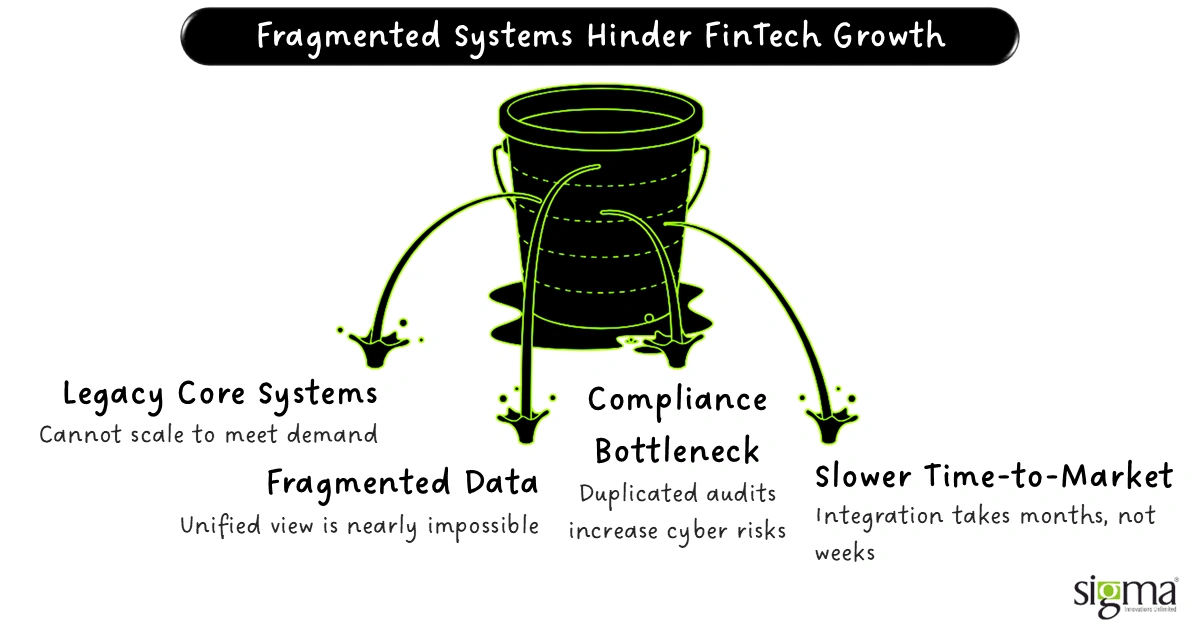
- Legacy core banking systems that can’t scale: Many institutions still rely on rigid, decades-old systems that were never designed for cloud, mobile, or real-time financial services.
- Fragmented data across lending, payments, and investments: Critical customer and transaction data sit in separate databases, making it nearly impossible to get a unified view for smarter decisions.
- Compliance and security bottlenecks: Isolated systems mean duplicated audits, outdated security patches, and increased exposure to cyber risks, especially in areas like Fintech Cybersecurity and Regulatory Technology (RegTech) & Compliance.
- Slower time-to-market: Launching new digital products or financial tools takes months of integration work, while competitors with Cloud Banking Solutions go live in weeks.
This fragmentation isn’t just a technical inconvenience; it’s a business risk. It inflates operational costs, limits agility, and erodes customer trust. Without unified systems, fintechs and lenders spend more time fixing infrastructure problems than delivering value.
The struggle for growth starts with infrastructure. Until financial institutions replace their aging, fragmented frameworks with a unified Digital Financial Services ecosystem, they’ll remain too slow to compete in a market demanding real-time speed and seamless compliance.
Cloud Banking as the Unifying Layer (The Market Shift)
The financial services industry is undergoing a fundamental shift, and it’s clear from the data. The global commitment to cloud adoption is massive, according to Growth Market Reports. The cloud computing market is projected to skyrocket to $2.33 trillion by 2033, and this rapid expansion reflects a robust CAGR of 17.2% as enterprises continue to prioritize scalable infrastructure and the proliferation of advanced technologies like AI, ML, and big data analytics. Meanwhile, JPMorgan Chase’s leadership has publicly committed to having 75% of its data and 70% of its applications in the cloud by the end of the year, positioning cloud as the foundational platform for advanced analytics and innovation.
In this context, Cloud Banking Solutions aren’t merely an IT upgrade; they become the orchestration layer that enables end-to-end agility, real-time insight, and unified delivery of Digital Financial Services. Think of it as replacing a chassis of disconnected engines with a single electric motor: scalable, efficient, and ready to accelerate.
Here’s how cloud banking provides that architectural advantage:
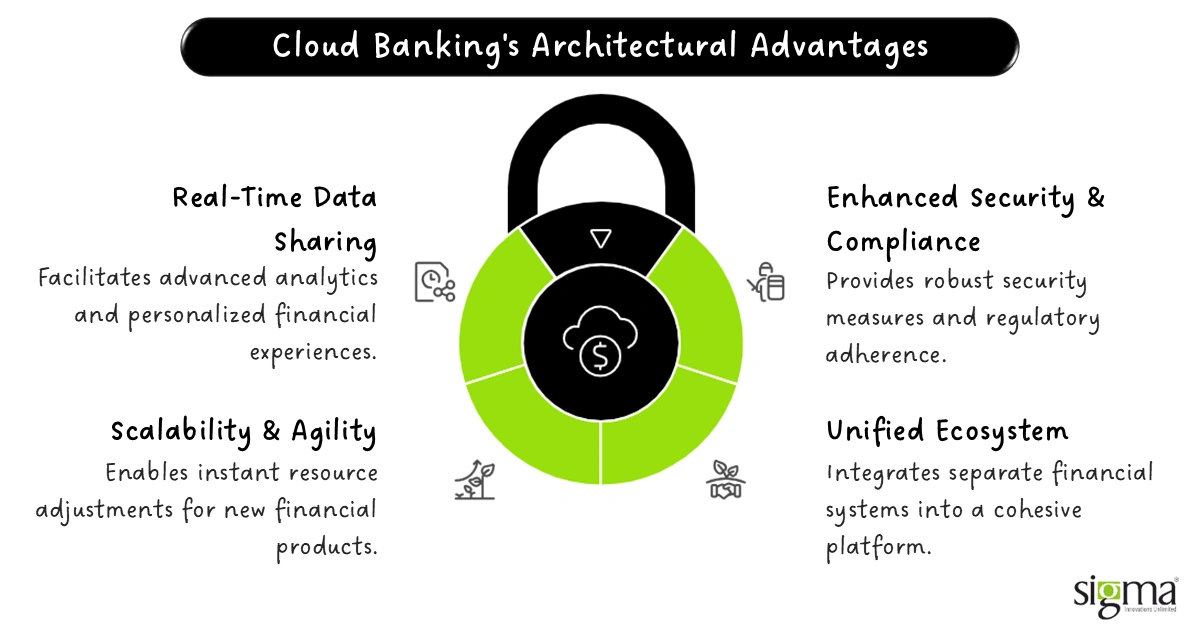
- Scalability & agility: A cloud environment allows institutions to ramp up or down resources instantly, vital when launching new payment rails, lending products, or investment portals.
- Unified ecosystem: By using a composable, API-first architecture, cloud banking stitches together what were once separate systems for lending, payments, and investments, unlocking the power of Streamlining Digital Lending, Digital Payment, and Investment Systems with Cloud Technology.
- Enhanced security & compliance: Modern cloud platforms embed security measures, resilience, and regulatory governance by default, helping address Fintech Cybersecurity and Regulatory Technology (RegTech) Compliance demands.
- Real-time data sharing: When data from lending, payments, and investments sits on one platform, institutions can apply Advanced Analytics, Cloud Computing, and Predictive Analytics for Financial Insights to:
1. assess risk more accurately,
2. comply faster,
3. personalize experiences in real time.
In short, the cloud is no longer just about “hosting data.” It’s about orchestrating innovation across the financial value chain. For fintechs, lenders, and investment firms ready to move beyond fragmented stacks, a cloud-native architecture becomes their competitive backbone, and for those unprepared, it becomes the gap behind them.
Also Read: Future-Proofing Portfolio Management Through Investment Software Solutions
How Cloud Banking Transforms Each Pillar
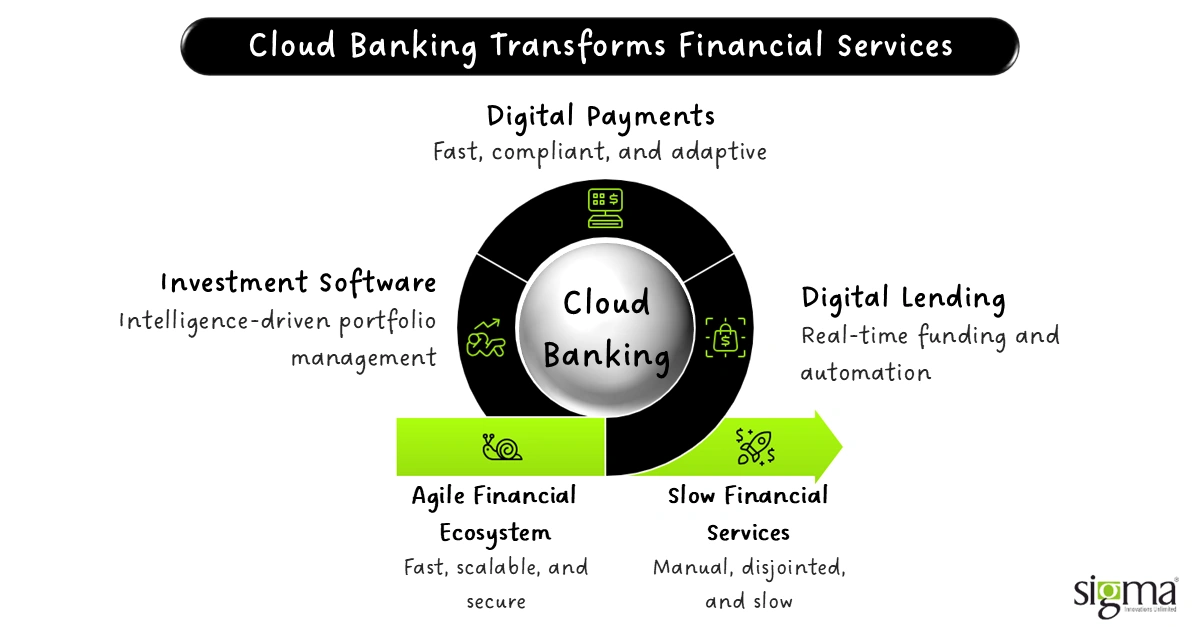
Cloud banking is changing the game across every corner of financial services. From Digital Lending Solutions to Digital Payment Solutions and Investment Software Solutions, the cloud is no longer just the platform; it’s the performance engine driving speed, trust, and intelligence.
Digital Lending: From Fragmentation to Real-Time Funding
What used to take days can now happen in hours. Thanks to cloud-native loan orchestration!
Traditional lenders have long wrestled with slow approvals, manual underwriting, and disjointed servicing systems. Each loan process often passes through multiple disconnected tools, creating data silos and compliance friction. The result? Delays, rising costs, and frustrated borrowers.
Enter cloud-native Loan Origination and Loan Management Systems (LOS & LMS) — built on modern, API-driven architectures. Platforms modeled after these unify credit assessment, KYC verification, and risk analytics in one place.
Here’s how the transformation happens:
- AI-powered underwriting: Machine learning models analyze real-time data to deliver instant credit decisions.
- Automated compliance: Integrated Regulatory Technology (RegTech) and Compliance tools check for AML and KYC compliance automatically.
- Same-day funding: Seamless data flow from application to disbursal enables real-time lending decisions, reducing approval cycles from days to hours.
- Scalable performance: Infrastructure as a Service (IaaS) and Platform as a Service (PaaS) make it easy to scale capacity during seasonal demand spikes.
This is the power of Custom Fintech Software Development, where agility meets automation to create smarter, faster lending experiences.
Payments: Speed, Compliance, and Interoperability
The future of payments isn’t just faster. It’s frictionless, compliant, and continuously adaptive!
Payment systems once relied on batch processing and overnight settlements. But in today’s on-demand economy, businesses expect real-time movement of money across borders, currencies, and networks.
Cloud Banking Solutions are fueling this shift by providing API-first, always-on infrastructures for Digital Payment Solutions. Through composable architectures, financial providers can plug in new payment channels or compliance APIs as easily as adding new apps to a smartphone.
Key enablers include:
- Embedded finance & Banking-as-a-Service (BaaS): The cloud allows non-banks to offer payment services seamlessly within their digital ecosystems.
- Real-time cross-border transactions: APIs connect multiple networks and regulatory regimes for instant, compliant settlements.
- AI-driven anti-fraud: Integrated intelligence powered by Fintech Cybersecurity solutions continuously scans patterns to detect suspicious activity.
- Dynamic scalability: Cloud infrastructure auto-adjusts to transaction volumes, ensuring zero downtime during peak loads.
In essence, cloud banking turns payments from a back-office operation into a strategic differentiator that is faster, safer, and smarter.
Investments: Intelligence-Driven Portfolio and Wealth Management
The smartest investment decisions today are powered by cloud-enabled intelligence!
The investment landscape has evolved from spreadsheets to real-time, cloud-driven analytics ecosystems. Wealth management and investment firms now rely on Fintech Software Solutions that integrate data from multiple sources, including client behavior, market trends, and portfolio performance into a unified cloud layer.
Here’s how Advanced Analytics and Cloud Computing are reshaping the space:
- Unified data architecture: Cloud platforms connect trading systems, CRMs, and market data feeds to deliver a single view of the investor.
- Predictive insights: By leveraging AI and Machine Learning, firms can forecast portfolio risks and opportunities with remarkable accuracy.
- Dynamic visualization: Tools like Power BI and Tableau move dashboards from static reports to real-time BI & predictive analytics, offering actionable intelligence in seconds.
- Personalized experiences: Cloud-driven insights enable advisors to deliver hyper-personalized recommendations, improving engagement and retention.
The result? Smarter portfolio management, proactive risk control, and higher client satisfaction are all made possible by Financial Software Development Services that unify intelligence and scalability.
From digital lending to payments and investments, cloud banking doesn’t just modernize operations; it creates a new digital nervous system for financial institutions. It’s the bridge between agility and assurance, helping fintechs deliver the speed, scalability, and security their customers expect in a truly connected financial ecosystem.
Also Read: Fintech Software Development Services Powering Inclusive Growth in Emerging Markets
Cloud as the Catalyst for End-to-End Fintech Transformation
True fintech transformation doesn’t happen app by app; it happens platform by platform!
For years, financial institutions have tried to modernize by upgrading individual applications — a new CRM here, a better payment gateway there. But real transformation begins when these tools operate as one connected system. That’s the power of Cloud Banking Solutions, creating a unified digital layer that integrates lending, payments, and investments seamlessly under a single architecture.
Cloud banking brings together what fintechs have long been chasing: speed, compliance, scalability, and intelligence. It eliminates silos by embedding automation and analytics directly into core financial workflows.
Here’s what that means in practice:
- Faster go-to-market: API-driven microservices let institutions launch new financial products in weeks, not months, by accelerating innovation.
- Simplified compliance: Built-in Regulatory Technology (RegTech) and Compliance tools and audit-ready cloud logs make meeting evolving regulations effortless.
- Operational efficiency: Centralized management and Infrastructure as a Service (IaaS) reduce maintenance overhead and cost.
- Resilient security: Enterprise-grade frameworks from AWS, Azure, or GCP provide continuous monitoring, encryption, and Fintech Cybersecurity safeguards.
The magic lies in the API-first ecosystem, a modular structure where every component (like payments, credit scoring, or fraud detection) communicates in real time. This microservices approach doesn’t just enhance agility; it fuels continuous innovation, enabling fintechs to compose, customize, and scale their platforms effortlessly.
For institutions aiming to future-proof their technology, cloud isn’t just the foundation; it’s the catalyst turning Digital Financial Services into high-performance, intelligence-driven ecosystems ready for whatever comes next.
Architecting the Future of Cloud Banking (Sigma Infosolutions’ Role)
Sigma builds the digital foundations on which modern fintechs scale!
At Sigma, we don’t just modernize systems, we reimagine what’s possible in financial technology. As a trusted partner for Fintech Software Development Services in the USA, Sigma enables financial institutions, lenders, and payment innovators to transform their operations through Cloud Banking Solutions that combine speed, security, and intelligence.
We understand that fintech transformation isn’t about one app or one upgrade; it’s about designing entire ecosystems that grow with your business. Here’s how we make that happen:
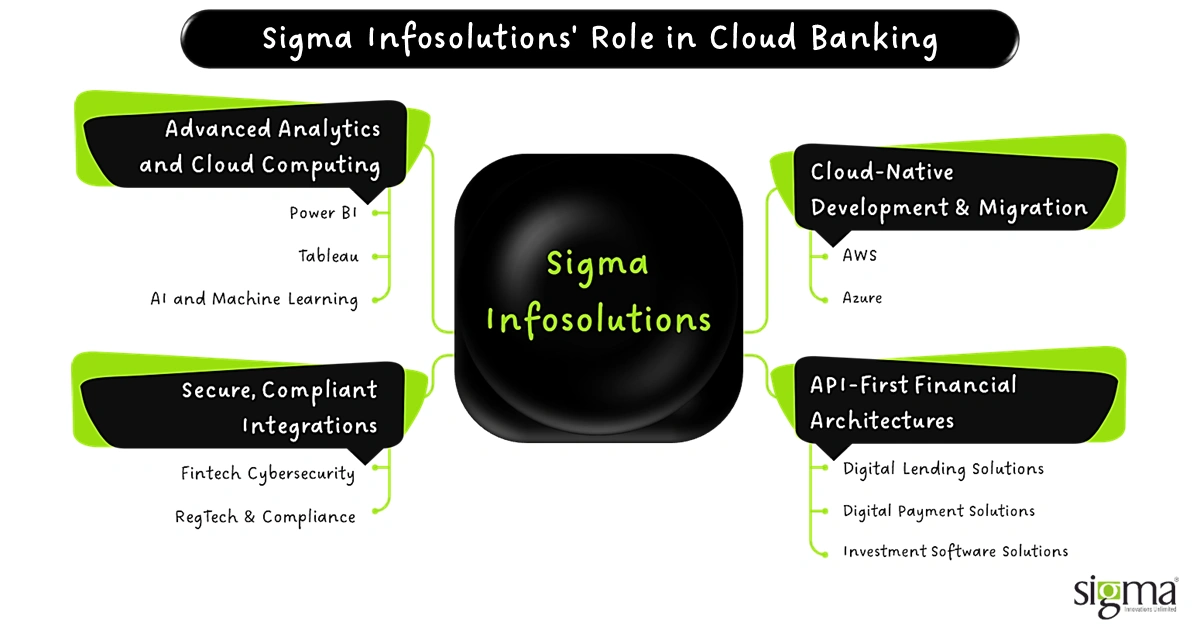
- Cloud-native development & migration: From AWS to Azure, Sigma architects scalable, API-driven infrastructures that ensure uptime, security, and performance. Our Infrastructure as a Service (IaaS) and Platform as a Service (PaaS) models empower clients to move faster, deploy seamlessly, and cut infrastructure costs.
- API-first financial architectures: We build composable microservices that enable seamless integrations across Digital Lending Solutions, Digital Payment Solutions, and Investment Software Solutions, future-proofing financial operations.
- Secure, compliant integrations: With deep focus on Fintech Cybersecurity and Regulatory Technology (RegTech) & Compliance, we deliver end-to-end encryption, role-based access control, and audit-ready systems aligned with global financial standards.
- Analytics-driven intelligence: Using Power BI, Tableau, and AI-driven data pipelines, Sigma creates a unified analytics layer for Advanced Analytics and Cloud Computing, leveraging AI and Machine Learning, and Predictive Analytics for Financial Insights to help institutions turn data into strategic advantage.
Client Impact in Action
Sigma’s expertise isn’t theoretical; it’s proven across high-impact fintech transformations:
- AI-Driven Mortgage POS Modernization using AWS & Next.js: We helped a leading mortgage firm migrate its POS to a cloud-native environment, cutting approval times by 40% and improving scalability.
- Re-engineering a Legacy LOS for Single-Day Funding: Sigma rebuilt a lender’s legacy Loan Origination System into an agile, cloud-native platform that achieved a record-breaking single-day funding turnaround.
- Driving Lending Insights through BI & Analytics: By integrating Power BI dashboards and predictive analytics, Sigma empowered a U.S.-based lender to gain deeper portfolio insights and reduce decision-making time by 30%.
- Accelerating Lending Operations with AWS-Powered Scalability: Our cloud modernization initiative improved system uptime, compliance reporting, and loan processing capacity for a digital lender.
- Transforming Government Check Verification with Salesforce: Using Salesforce automation and secure cloud workflows, Sigma enhanced accuracy and compliance in public-sector financial verification processes.
At Sigma, we go beyond code! We deliver enterprise-grade Fintech Software Solutions that help financial institutions scale confidently in the digital-first world. Whether it’s modernizing your loan systems, building API-driven payment rails, or crafting intelligent investment dashboards, Sigma’s architects bring the strategy, security, and scalability needed for tomorrow’s fintech ecosystem.
With Sigma Infosolutions, you’re not hiring a tech vendor, but you’re partnering with a team that builds the cloud foundations for Digital Financial Services that grow stronger every year.
Also Read: Banking-as-a-Service (BaaS) Solutions Driving Growth in Embedded Finance
Where Cloud Banking Is Headed (The Future Outlook)
The future of finance is no longer being written in boardrooms; it’s being built in the cloud. As fintechs and financial institutions race toward agility, inclusivity, and intelligence, cloud banking has become the digital backbone of financial innovation. The next wave of transformation will be powered by open ecosystems, intelligent automation, and hyper-personalized customer journeys.
Here are the key trends shaping the next decade of cloud banking:
- Open Banking APIs: Secure and standardized APIs are enabling banks and fintechs to collaborate seamlessly, unlocking new business models built on data-sharing and transparency. Customers gain more control, while institutions gain richer insights into user behavior and needs.
- Embedded Finance: Financial services are becoming invisible yet omnipresent, embedded directly into eCommerce, logistics, healthcare, and other sectors. APIs and cloud-native systems are turning every business into a potential fintech.
- Cloud-Native Core Replacements: Legacy cores are being replaced with modular, cloud-native banking platforms that support real-time processing, 24/7 uptime, and effortless scalability. This shift is helping financial institutions shed technical debt and embrace continuous innovation.
- AI-Driven Personalization and Fraud Analytics: Artificial intelligence is reshaping risk management and customer experience. From real-time fraud detection to predictive credit scoring and hyper-personalized offers, AI and machine learning are redefining how trust is built in digital finance.
As these trends converge, the future of cloud banking will redefine how money moves, how risk is managed, and how trust is earned. Institutions that embrace cloud-native architectures, API-first designs, and analytics-driven decisioning will lead the financial frontier and offer faster, safer, and smarter services at scale.
The real disruption won’t come from technology alone, but from how financial organizations use cloud-driven intelligence to deepen customer relationships and create value ecosystems.
Because in the end:
“The winners of tomorrow’s financial world are building on the cloud today!”
Final Thoughts
The financial world has reached a pivotal moment, one where success depends not on how many systems a fintech runs, but on how seamlessly those systems connect. Cloud Banking is no longer a technology upgrade; it’s the foundation for unified, intelligent financial ecosystems that power real-time lending, frictionless payments, and personalized investments.
Across every vertical of modern finance, the message is clear: Cloud is the catalyst for transformation. It unifies fragmented operations, accelerates compliance, and scales innovation at the speed of customer demand.
At Sigma Infosolutions, we don’t just migrate platforms; we architect transformation by helping fintechs, lenders, and financial institutions:
- Design cloud-native infrastructures that scale with demand.
- Build API-first ecosystems for composable financial services.
- Integrate secure, compliant data layers that power intelligent decision-making.
- Enable continuous innovation through analytics, automation, and AI.
Whether it’s re-engineering legacy systems, enabling real-time loan funding, or powering analytics for better decisioning, Sigma has done it for leading financial innovators. Our cloud-driven fintech frameworks, built on AWS, Azure, and Salesforce, ensure speed, compliance, and resilience from day one.
The future belongs to fintechs that act now and those ready to reimagine how finance flows, scales, and connects in the digital world.