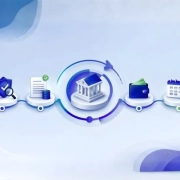
Launching an Earned Wage Access Platform from Scratch: Architecture, Integrations, and Compliance Essentials

Key Takeaways:
- Successful EWA isn’t just a “withdraw” button, but a high-stakes financial engine that requires rock-solid payroll API integrations and real-time wage math to avoid a total synchronization nightmare.
- With the ongoing regulatory shifts, building “Compliance by Design” into your earned wage access system architecture is the only way to scale nationwide without getting sidelined by state-specific legal hurdles.
- To move from a small pilot to a national powerhouse, you need a scalable cloud infrastructure that can handle thousands of requests per second. At Sigma Infosolutions, we engineer that “horsepower” so you can focus on growth while we handle the heavy-duty tech.
Many fintech leaders start with a simple idea of building a tool that helps workers get their pay early. It sounds like a basic plugin or a nice-to-have mobile button. However, thinking that an earned wage access platform is just a simple “feature” is like saying a high-speed train is just a bus with different wheels. In reality, you are building a massive, real-time financial engine.
By 2027, the global market for these early wage access ecosystems is projected to grow by over 15%, reaching a staggering $1.2 billion as businesses scramble to retain talent in a shifting economy. If you treat this like a weekend coding project, you’ll quickly run into a wall of failed payroll syncing, angry employees, and legal headaches that could sink your reputation before you even really launch.
For North American lenders and fintech founders, the stakes are incredibly high. You aren’t just moving data, because you are managing liquidity, complex wage math, and strict state-by-state rules. This is where the right foundation makes or breaks you. Companies that win in this space don’t go it alone, in-stead they lean on experts who understand how to build financial software development services that actually scale. Whether you are looking for digital lending solutions or deep product engineering services, the goal is to build a system that works perfectly every single time a worker clicks “withdraw” seamlessly.
In a market where 78% of US workers live paycheck to paycheck, being first to market with a stable, secure platform isn’t just a win, but a massive competitive moat. Technology leaders who prioritize a scalable cloud infrastructure from the start avoid the “technical debt” that kills most startups in their second year.
This article explains the core system architecture, integration layers, and compliance foundations required to launch a successful earned wage access platform from scratch.
Why Most “Instant Pay” Projects Crash Before Takeoff
When you look at a worker getting their pay a week early, it looks as simple as a Venmo transaction. Many tech leaders mistakenly think building an earned wage access platform is just about making a pretty mobile app, connecting to a payroll file, and hitting “send.” But that’s like looking at the tip of an iceberg while ignoring the mountain of ice underwater. By 2028, experts predict that wage-based credit models will handle over $50 billion in volume as more companies ditch the old two-week pay cycle. If your tech isn’t ready for that kind of weight, the whole thing collapses. The demand is exploding, but so is the complexity of staying upright in a crowded market.
Also, read the blog: The Complete Guide to Fintech Software Development: Build Secure, Compliant, Scalable Financial Platforms

In the real world, things get messy fast. We’ve seen teams run into “sync nightmares” where the platform thinks a worker has earned $500, but the employer’s system says it’s only $300 because of a tax glitch or a missed shift. If your payroll API integrations aren’t rock-solid, you end up with massive holes in your books. Even worse, if you don’t have a loan servicing and repayment engine that can talk to different bank systems at the same time, your money gets stuck in limbo. You aren’t just building an app, but a high-speed bridge between a worker’s bank and a company’s payroll office. If that bridge isn’t engineered to handle a thousand trucks at once, it’s going to fail right when you need it most.
For a CTO or Product VP, the real danger is the scalability challenges in EWA systems. If your platform can’t onboard a 500-person company in a few clicks because their HR software is “old,” you’ve lost the deal. Winning in this space means having a scalable cloud infrastructure that treats every employer like a unique partner, not a one-size-fits-all problem. This is why having a partner who knows digital lending solutions inside and out is the ultimate competitive advantage.
How a Professional EWA Platform Engine Actually Works
Building a world-class earned wage access platform is like building a digital nervous system for a company’s money. It isn’t just about moving dollars, but also about moving them accurately and instantly. Experts predict that by 2027, embedded finance for payroll systems will be a standard expectation for 60% of North American enterprises. To hit that mark, your earned wage access system architecture needs five heavy-duty layers working in perfect harmony.

1. The Worker’s Command Center Layer
The mobile app is what the employee sees, but under the hood, it’s a high-speed calculator. It shows exactly how much they’ve earned since their last clock-out. This layer handles the “front-line” tasks by checking IDs, showing transaction history, and managing credit limits and repayment workflows. If this isn’t smooth, you lose the user’s trust immediately.
2. The Employer’s Control Plane Layer
Companies need a way to manage their teams without a headache. This portal lets them flip a switch to onboard new hires, set limits on how much can be taken out, and watch how the benefit is helping keep people on the job. It’s the “dashboard” that makes the HR manager’s life easier, not harder.
3. The Payroll Pulse Layer
This is where most DIY projects fail. Your platform must have deep payroll API integrations with systems like ADP, Workday, or UKG. Think of it like a translator who speaks twenty different languages fluently. It pulls data from time-clocks and tax tables to figure out the “net pay” in real-time. Without this, your math will be wrong, and your payroll reconciliation will be a disaster.
4. The Lending and Liquidity Engine Layer
Even if you call it a “benefit,” there is a massive amount of money moving around. This engine manages the “fuel” for the platform. It handles the loan servicing and repayment engines that decide who gets what and when. It manages the risk, sets the fees, and ensures the money is there when the “withdraw” button is pressed.
5. The Scalable Power Grid Layer
Finally, you need a scalable cloud infrastructure to hold it all up. Using a microservices setup means that if one part of the app has a glitch, the whole system doesn’t go dark. This layer handles thousands of requests a second, ensuring that on a Friday afternoon when everyone wants their pay, the system doesn’t even blink.
Understanding scalability challenges in EWA systems is the key to a long-term win for a technology leader. If your architecture is modular, you can swap out a payroll provider or update a compliance rule without rebuilding the entire house. This flexibility allows you to pivot and grow faster than your competitors. Relying on expert product engineering services ensures that your “bridge” is built for the traffic of tomorrow, not just the stroll of today.
Navigating the Rulebook of Modern Legal Pay
Building a platform for earned wage access is like opening a bank in the middle of a moving train. You have to keep the money safe while the tracks underneath you are constantly shifting. In the U.S., the rules for how you handle someone’s paycheck aren’t the same in California as they are in New York. In fact, a major update from the Consumer Financial Protection Bureau (CFPB) clarified that many employer-partnered models are not considered “credit” under federal law, as long as they follow very specific rules. If you miss even one of these details, your “benefit” could be reclassified as a high-interest loan, bringing a world of legal trouble to your doorstep.

For North American fintechs, compliance isn’t just a boring legal checklist, but a shield. By the end of this year, over a dozen states will have passed their own specific laws requiring licenses for anyone offering wage-based credit models. According to the recent Regulatory State of EWA report, states like California and Maryland now treat certain EWA products as credit, while others like Nevada and Missouri have created a completely separate category. If your earned wage access platform isn’t built with these “geographic switches” in mind, you’ll find yourself locked out of the biggest markets in the country.
The secret to staying ahead is “Compliance by Design.” This means your earned wage access system architecture should automatically handle things like transparent fee disclosures and credit limits & repayment workflows based on where the employee lives. By embedding these controls into your digital lending solutions, you reduce the risk of human error. Using a scalable cloud infrastructure with built-in audit trails ensures that when a regulator knocks, you can hand them a perfect report in minutes, not weeks. This level of readiness is exactly what Sigma Infosolutions delivers, helping you turn “red tape” into a competitive moat.
Read our success story – Re-engineering a Legacy LOS to Achieve a Single-Day Funding Record
Scaling Up From Local Pilot to National Powerhouse
Starting a pilot program for your earned wage access platform is like testing a new car on a quiet backroad. It’s easy to manage 50 employees at a local warehouse. But when you flip the switch to a national rollout, you’re suddenly merging onto a 10-lane highway at rush hour. By 2027, the global market for EWA software is expected to explode to over $12.6 billion, growing at a staggering 30% CAGR. If your “engine” isn’t built for that speed, your growth will stall out before you even leave the first city.
The jump from a few hundred users to millions creates massive scalability challenges in EWA systems. On a Friday afternoon when everyone wants their pay at the same time, your payroll API integrations have to handle thousands of requests a second without a single glitch. This is why a “modular” approach is non-negotiable. You need a system where you can add new employers, sync complex multi-state tax rules, and manage high-volume credit limits and repayment workflows all at once. Without a scalable cloud infrastructure that can breathe and grow with your traffic, your early success could actually become your biggest bottleneck.
Leaders who choose Fintech Product Engineering Services that prioritize automation, especially in employer onboarding and real-time reconciliation, gain a massive head start. By the time your competitors are struggling to fix bugs in their pilot code, you’ll be busy capturing the next 10,000 users. Investing in a professional, hardened architecture from day one is like having the “horsepower” to leave everyone else in the rearview mirror.
Accelerating Your Path to Market Leadership
Launching a world-class earned wage access platform is a massive undertaking that touches every part of the modern financial stack. It requires a deep understanding of how money, data, and law intersect in real-time. For many NBFIs and fintech entrants, trying to build this entire ecosystem from scratch is like trying to build a plane while you’re already on the runway. The complexity of managing loan servicing and repayment engines alongside shifting state regulations can delay your launch by months or even years, giving your competitors a massive head start.
This is where a strategic partner like Sigma Infosolutions makes the difference. We don’t just build apps, but engineer complete, high-performance financial environments. Our teams specialize in Fintech Product Engineering Services that cover every “hidden” layer of an EWA system. From creating intuitive employee mobile apps to developing complex payroll API integrations that keep your data accurate, we provide the technical expertise you need to go from concept to “live” with confidence.
Frequently Asked Questions
1. What is the ideal architecture for earned wage access systems?
A modern EWA architecture should be modular and microservices-based. It must include a secure employee interface, an employer portal, a robust HRMS/Payroll integration layer, a lending engine for liquidity management, and a high-availability cloud backend to process real-time wage accruals.
2. How do employer-integrated wage access platforms handle data?
These platforms use deep payroll API integrations to pull real-time data on hours worked and gross-to-net pay calculations. This ensures that the “available balance” shown to the employee is 100% accurate and reconciled automatically during the next payroll cycle.
3. How does lending logic for earned wage access products work?
The logic manages credit limits and repayment workflows by calculating a safe “buffer” of earned wages (usually 50-70%) that an employee can access. It also handles the automated recovery of funds via payroll deduction or bank ACH, ensuring the platform stays liquid and risk-controlled.
4. What are the key compliance requirements for earned wage access?
Compliance focuses on fee transparency, consumer protection, and state-specific licensing. Platforms must stay updated on CFPB rulings and individual state laws (like those in California or Missouri) to ensure the service is classified as a benefit rather than a high-interest loan.