Digital Lending Solutions Explained: From Origination to Collections

Key Takeaways:
- Operating with siloed tools is like running a high-performance engine with disconnected parts. We replace the patchwork with a unified cloud lending platform engineered to perform as one powerful system.
- In 2026, “we’ll get back to you” is a deal-breaker. With automated underwriting built into your workflow, we turn day-long delays into 48-second decisions—so borrowers stay engaged instead of looking elsewhere.
- Stop letting your lending data play broken telephone. Sigma builds the connective layer—an API-first lending platform that keeps origination, servicing, and collections perfectly in sync.
Why Your Current Tech Stack is Quietly Draining Your Profits
If you’re a technology leader at a mid-sized lender or a growing fintech, you’ve likely felt that nagging sense that things could be smoother. You have a tool for intake, a system for managing the loans, and maybe a separate portal for tracking down late payments. On paper, it looks like a complete digital setup. But in reality? It’s a “Fragmented stack” or “Disconnected ecosystem” a patchwork of tools that don’t actually talk to each other.
This isn’t just a minor annoyance, but a massive financial drain. In the US lending market, where competition for every borrower is fierce, even a tiny bit of friction can send a high-quality applicant straight to your competitor’s mobile app. Recent data shows that 68% of consumers abandon online credit applications in financial services if the process feels too clunky or takes more than a few minutes.

The Cost of “Integration Debt”
Think of your tech stack like a relay race. If your “runners” (your different software tools) drop the baton during the hand-off, you lose the race.
- Manual Data Re-entry: When your team has to move data by hand from your intake form to your servicing system, mistakes happen. The average error rate for manual data entry is about 1%, which sounds small until you realize it can cost up to $139 to fix a single incorrect report later down the line.
- The Compliance Nightmare: Trying to pull a clean audit trail across three different siloed platforms is like trying to solve a puzzle with missing pieces. For North American lenders, failing a regulatory check isn’t just a slap on the wrist, but a threat to your license.
- Stale Insights: By the time your collections team realizes a borrower is struggling, the data is already weeks old because it’s trapped in a separate silo.
At Sigma Infosolutions, we’ve seen how this “Integration Debt” cripples otherwise healthy lenders. We believe that true success in 2026 isn’t about adding another shiny tool to the pile, but architecting a unified ecosystem where data flows like water from the first click to the final payment. While most vendors sell you a standalone piece of the puzzle, the real winners in the North American market are those who look at the complete journey of a loan as one single, unbroken thread.
If your team spends more than 20% of their day “checking” if data moved correctly between systems, you don’t have a technology solution but a digital babysitting job. This is the moment to shift from “buying tools” to “building an architecture” that scales.
The Three Pillars of a High-Performing Lending Journey
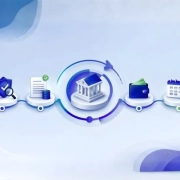
To win in today’s North American market, you can’t just throw software at a problem. You need a lifecycle-driven lending platform. This means every step, from the moment a borrower clicks “Apply” to the day they make their final payment, must feel like one smooth conversation.
When you break down a truly elite cloud lending platform, it stands on three major pillars. If one is weak, the whole structure leans. If they aren’t connected, the structure collapses.

1. Smooth Intake and Fast Decisions (The Entry Point)
The first pillar is all about borrower onboarding. This is where most lenders lose their customers. In 2026, a “digital form” isn’t enough. You need a system that does the heavy lifting for the user.
- Smart Data Pulls: Instead of asking a borrower to type in their income, your loan origination system should use an API-based lending platform to pull that data directly from their bank or payroll provider.
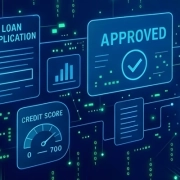
- The “Instant” Standard: Modern loan underwriting automation isn’t just a luxury, it’s the baseline. By the time a user finishes their application, your automated underwriting software should have already run a background check against credit bureaus and fraud databases.
- The Result: You move from “We’ll get back to you in 48 hours” to “You’re approved in 48 seconds.”
2. Intelligent Loan Management and Servicing (The Engine Room)
Once the money is out the door, the work really begins. This second pillar is your loan servicing software. This is where your “Single Source of Truth” lives.
- Real-Time Updates: If a borrower changes their phone number on your mobile app, that change should instantly show up in your SaaS lending platform for the support team.
- Automated Logic: A high-end engine handles the math of interest accrual, late fee triggers, and escrow adjustments without a human ever touching a calculator. This reduces the “compliance anxiety” that keeps operations managers up at night.
- Lending Analytics: This is the “brain” of the engine. By looking at how thousands of borrowers behave, you can spot trends. Are people in a certain zip code paying late? Is a specific loan product underperforming? You can’t answer these questions if your data is stuck in a spreadsheet.
3. Proactive Recovery and Communication (The Safety Net)
The final pillar is often the most neglected: collections management software. Most companies wait until a payment is 30 days late to act. That’s a reactive (and expensive) way to run a business.
- Predictive Flagging: A unified system uses regulatory compliance lending data and behavioral cues to flag an “at-risk” account before they miss a payment.
- Multi-Channel Outreach: Maybe a Gen Z borrower ignores phone calls but responds to a text message with a “Pay Now” link. Your system should know that.
- The Efficiency Boost: When your recovery tools are part of your core lending software for fintech, your team spends less time digging for contact info and more time helping borrowers find a way to pay.
Why This Matters for Your Competitive Edge
According to recent fintech projections, lenders using fully integrated digital lending software solutions are expected to see a 25% reduction in operational costs by 2027 compared to those using siloed tools. For a company doing $50 million in revenue, that’s millions of dollars back on the bottom line.
The Reality of Modernizing Your Infrastructure
It’s one thing to talk about a cloud architecture; it’s another thing entirely to migrate a nationwide mortgage operation without losing a single lead or a second of uptime. At this stage, many North American lenders realize their biggest hurdle isn’t a lack of vision—it’s the “ghosts in the machine.” We often see companies try to slap a modern interface on top of a rigid database, but true transformation requires a deeper dive into the lending lifecycle.
A Tale of Transformation: A “War Story”
Take, for example, our work with a leading direct mortgage lender in the U.S. They were already a powerhouse, but they knew that to stay ahead, they needed to reimagine their borrower onboarding and team collaboration from the ground up.
- The Challenge: The client needed a way to simplify complex loan applications while ensuring strict regulatory compliance in lending. Their team was juggling manual document verification and needed a way to nurture leads better so they didn’t lose them to competitors.
- The Solution: At Sigma Infosolutions, we didn’t just give them a “skin.” We provide robust solutions for a perfect API-based lending platform using a modern stack of .NET Core and Node.js. We engineered a secure borrower portal for real-time tracking and a lender portal that gave loan officers a “single pane of glass” view of every application. We moved their infrastructure to a high-performance cloud lending platform using AWS (EC2, S3, and EKS) to ensure they could scale as fast as the market demanded.
- The Result: By implementing loan underwriting automation and integrating third-party APIs for credit and property checks, the client saw a 25% reduction in loan processing time. Even better? Their lead nurturing improved so much that they saw a 30% increase in loan conversions.
Read the full success story here: Revolutionized Mortgage Lending with Cutting-Edge Technology
Why “Off-the-Shelf” Often Fails the Stress Test
Many tech leaders are tempted by “all-in-one” boxed software. But the honest truth from the engineering desk is that a mortgage-scale operation has unique needs for loan origination system flexibility. A rigid, cookie-cutter SaaS lending platform might solve 80% of your problems, but that final 20%, the custom workflows and specific security protocols, is where your team’s productivity goes to die.
By the year 2026, experts predict that over 75% of successful fintechs will rely on these “composable” architectures rather than monolithic software.
The Strategic Engineering Advantage
When you treat your tech stack as a unified journey, you gain the ability to use lending analytics in ways your competitors can’t. You can see exactly where a borrower stalls in the portal or which loan products are driving the most revenue.
This isn’t just “IT work”, this is building a competitive weapon. At Sigma Infosolutions, we’ve proven with partners like a leading U.S. mortgage lender that when you bridge the gap between your loan servicing software and your front-end experience, you don’t just process loans, you build long-term relationships.
If your current system feels like it’s holding your loan officers back rather than cheering them on, you are paying a “fragmentation tax.” Our client eliminated that tax and gained a 90% positive feedback rating from their borrowers. Isn’t it time you did the same?
Final Thoughts
To wrap this all up, it’s time to stop looking at your technology as a list of separate expenses and start seeing it as the heartbeat of your business. In the North American lending market, the “middle of the road” is disappearing. You are either a friction-free, data-driven powerhouse, or you are a legacy lender struggling to keep the lights on.
The Path to a Frictionless Future
The shift toward a unified lending lifecycle isn’t just a trend, but a survival strategy. By the end of 2026, the gap between lenders who use integrated digital lending solutions and those who don’t will be a chasm. Statistics suggest that firms investing in end-to-end automation see a 30% increase in customer lifetime value because they can offer better rates and faster service.
At Sigma Infosolutions, we don’t just hand you a login to a generic platform and wish you luck. We act as your strategic engineering partner. We understand that your loan origination system needs to talk to your loan servicing software, and both need to feed real-time data into your collections management software. Our team specializes in building these integrated layers on top of a secure, scalable cloud architecture that grows as your portfolio grows.
Whether you are looking to kill off your “integration debt,” implement smarter loan underwriting automation, or move your entire operation to a high-performance SaaS lending platform, we have the “war stories” and the technical chops to get you there without the typical migration headaches.
Take the Next Step
If you’re a technology decision-maker ready to stop managing “tools” and start leading a unified ecosystem, let’s talk. We can help you audit your current setup and build a roadmap that turns your tech stack into your biggest competitive advantage.
Ready to transform your lending journey? Contact Sigma Infosolutions today to explore our Financial Software Development Services
Frequently Asked Questions (FAQs)
1. What exactly is “Integration Debt” in digital lending?
It’s the hidden cost of running separate, disconnected systems for your LOS, LMS, and collections. When your tools don’t talk, your team has to bridge the gap manually, leading to data errors and high borrower abandonment.
2. How does loan underwriting automation improve my bottom line?
By using AI to vet borrowers in real-time, you reduce the “time-to-yes.” This doesn’t just lower your cost-per-loan; it drastically increases conversion rates because modern borrowers won’t wait more than a few minutes for an answer.
3. Is it risky to migrate my legacy data to a cloud architecture?
While any migration has complexities, staying on rigid legacy systems is riskier. We use a modular, API-first approach on AWS to ensure your data migrates securely with zero downtime, turning “ghosts in the machine” into a scalable engine.
4. Can I integrate third-party data like Plaid or credit bureaus easily?
Yes. An API-based lending platform is designed specifically to “plug and play” with external data providers. This allows for borrower onboarding that is nearly instantaneous and significantly more accurate.
5. How does a unified system help with regulatory compliance?
When your data lives in a “single pane of glass,” auditing becomes a breeze. Automated systems create an unchangeable trail of every decision, ensuring you stay on the right side of North American lending laws without the manual headache.
6. Does digital lending remove the “human touch” from the process?
Actually, it enhances it. By automating the grunt work, like data entry and basic vetting, your loan officers can focus on high-value relationships and complex files that truly need a human eye.